







Shopping Cart
There are no more items in your cart



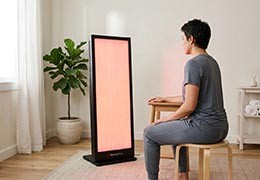




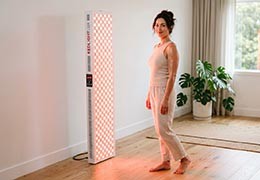

What Is Red Light Therapy — And Why Is Everyone Talking About It?
Red light therapy is one of the most exciting developments in modern wellness technology — and it's far more grounded in science than most trends you'll encounter online. At its core, red light therapy (also called photobiomodulation, or PBM) uses specific wavelengths of red and near-infrared light — typically between 630nm and 850nm — to penetrate your skin and stimulate biological processes at the cellular level. Unlike UV rays, which damage skin cells, therapeutic red light does something remarkable: it feeds your mitochondria, the tiny powerhouses inside every cell in your body.
Think of your cells as solar-powered engines. In the right conditions, they produce abundant energy. But modern indoor lifestyles have cut us off from the natural light spectrum our biology evolved to rely on. Red light therapy helps bridge that gap — non-invasively, safely, and conveniently, right from your own home.
The Science Behind the Glow: How Photobiomodulation Works
The mechanism behind red light therapy is surprisingly well-understood for a wellness technology. When red or near-infrared light reaches your cells, it's absorbed by a specific enzyme in the mitochondrial membrane called cytochrome c oxidase. This triggers a cascade of cellular events: ATP (adenosine triphosphate) — the primary energy currency of cells — is produced in greater quantities, oxidative stress is reduced, and nitric oxide is released, improving local blood flow and circulation.
The result? Cells that are better nourished, more efficient at repairing themselves, and more responsive to healing signals. This is not a placebo effect or a marketing claim — it is the subject of thousands of peer-reviewed studies published in journals ranging from the Journal of Photochemistry and Photobiology to JAMA Dermatology. The science is real, and it is growing.
Who Can Benefit from Red Light Therapy?
One of the most compelling things about red light therapy is the sheer breadth of people it can help. Athletes use it to accelerate muscle recovery and reduce delayed-onset muscle soreness (DOMS). People struggling with skin aging use it to boost collagen production and reduce the appearance of fine lines and wrinkles. Those dealing with chronic pain, joint stiffness, or inflammatory conditions find real relief through consistent use. And increasingly, people are turning to red light therapy to support better sleep, sharper cognition, and a more balanced mood.
Whether you're a fitness enthusiast, a skincare devotee, a biohacker, or simply someone looking for a drug-free approach to feeling better, red light therapy offers a compelling, evidence-based option that fits into everyday life.
Common Misconceptions About Red Light Therapy
Despite its growing popularity, red light therapy is still widely misunderstood. Some people confuse it with UV tanning — it has nothing to do with UV radiation. Others assume it's the same as infrared heat therapy, when in fact near-infrared light works at a completely different biological level than simple heat. And many beginners believe that more exposure automatically means better results, when in reality dosage — the right intensity, the right wavelength, the right duration — is everything.
Another common myth is that red light therapy is only effective in clinical settings. Today's home-use devices, when properly engineered with adequate irradiance (measured in mW/cm²) and clinically relevant wavelengths, can deliver results comparable to professional treatments — at a fraction of the cost and with the convenience of daily use in your own space.
How to Get Started Safely and Effectively
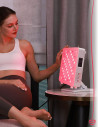
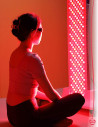
Starting red light therapy doesn't have to be complicated. The fundamentals are straightforward: choose a device that emits wavelengths in the 630–850nm range, maintain the recommended distance from the light source (typically 15–30cm for most panels), and begin with sessions of 10–20 minutes, three to five times per week. Consistency matters more than duration — regular, moderate sessions produce far better results than sporadic marathon treatments.
Always protect your eyes with appropriate goggles during sessions, especially when using devices that include near-infrared wavelengths, which are invisible to the naked eye. Start gradually if you have sensitive skin, and track your results over a four-to-twelve week window — that's the realistic timeframe for most users to begin noticing meaningful improvements.
Red light therapy is not a magic bullet. But for those willing to commit to a consistent routine, it is one of the most powerful, side-effect-free tools in the modern wellness arsenal. This beginner's guide is your starting point — and what lies ahead in this knowledge base will take you much further.