






Shopping Cart
There are no more items in your cart





The Light-Sleep Connection Most People Don't Know About
We live in a world awash with artificial light — and it is quietly sabotaging the sleep of millions. The human body evolved under a daily rhythm of sunlight and darkness, and every cell in your body runs on a biological clock — your circadian rhythm — that is fundamentally calibrated by light. The problem is that modern artificial lighting, particularly the blue-spectrum LEDs that dominate our screens, office environments, and home lighting, disrupts these ancient biological rhythms in ways that accumulate into chronic sleep dysfunction.
Red light therapy offers a genuinely elegant solution to this modern problem. Unlike blue light, which signals "daytime" to the brain and suppresses melatonin production, red and near-infrared light sit at the opposite end of the visible spectrum. They are the colours of sunrise and sunset — the wavelengths our circadian systems associate with the transition between wakefulness and sleep. Using red light in the evening is not simply aesthetic; it is biologically congruent with the circadian cues your nervous system needs to prepare for restorative sleep.
How Red Light Supports Melatonin Production and Sleep Quality
Melatonin — the hormone that regulates sleep onset, depth, and circadian timing — is produced by the pineal gland in the brain, and its production is profoundly sensitive to light. Blue light (400–500nm) suppresses melatonin with particular potency, which is why screen use in the evening delays sleep onset and reduces sleep quality. Red light (620–700nm), by contrast, has minimal effect on melatonin suppression, allowing the brain's sleep-onset machinery to proceed unimpeded.
But red light therapy goes beyond simply not disrupting sleep — there is evidence it actively promotes it. A 2012 study published in the Journal of Athletic Training found that female athletes who received regular red light therapy sessions experienced significant improvements in sleep quality, sleep duration, and melatonin levels compared to a control group. The proposed mechanism involves red light's effect on mitochondrial function in the pineal gland itself, supporting more efficient melatonin synthesis as part of the broader cellular energy improvements that photobiomodulation induces throughout the body.
Circadian Rhythm Reset and Light Scheduling
Understanding circadian health means understanding that light exposure at different times of day has fundamentally different — and in some cases opposite — effects on your biology. Morning bright light exposure is one of the most powerful tools for anchoring your circadian rhythm, resetting your internal clock, improving daytime alertness, and supporting earlier, more consistent sleep onset in the evening. Evening red light exposure supports the transition into sleep mode by maintaining a warm, low-blue-light environment that allows melatonin to rise naturally.
For people dealing with circadian rhythm disruptions — whether from shift work, jet lag, irregular schedules, or the accumulated effect of years of poor light hygiene — red light therapy can be a remarkably effective recalibration tool. Using a red light panel in the evening instead of overhead LED lighting creates a physiological environment that signals winding down, helping even stubborn insomnia patterns yield to more natural sleep timing.
Red Light Therapy for Insomnia, Stress, and Relaxation
The sleep-promoting effects of red light therapy extend beyond circadian signalling. The anti-stress and parasympathetic nervous system support that photobiomodulation provides is increasingly well-documented. Regular red light therapy sessions have been shown to reduce cortisol levels — the primary stress hormone that, when chronically elevated, is one of the most significant drivers of sleep disruption. By supporting mitochondrial function in stress-response tissues and reducing systemic inflammation (a known contributor to sleep disturbance), red light therapy addresses several of the upstream biological factors that stand between you and a good night's sleep.
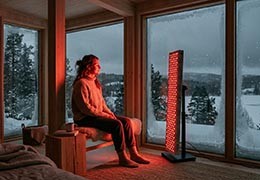
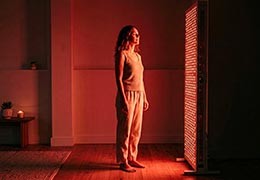
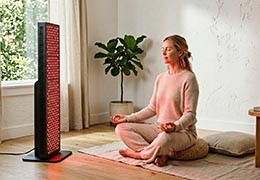
Many users report that red light therapy sessions in the evening have a distinctly calming, almost meditative quality — not unlike the feeling of sitting in the warm glow of a sunset. This is not simply psychological: the biological effects of 660nm light on the nervous system include measurable reductions in heart rate variability markers of stress and improvements in parasympathetic tone. Combined with appropriate sleep hygiene — consistent sleep times, a cool room, limited screen use — red light therapy in the evening can be a transformative addition to your sleep optimisation toolkit.
Bedroom Lighting, Device Selection, and Evening Protocols
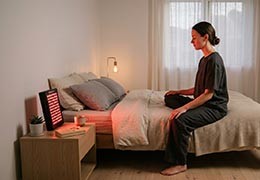
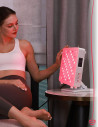
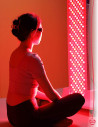
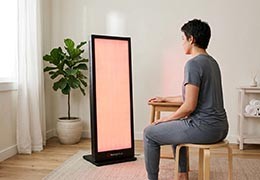
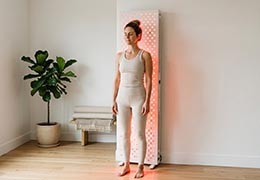
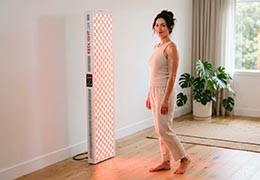
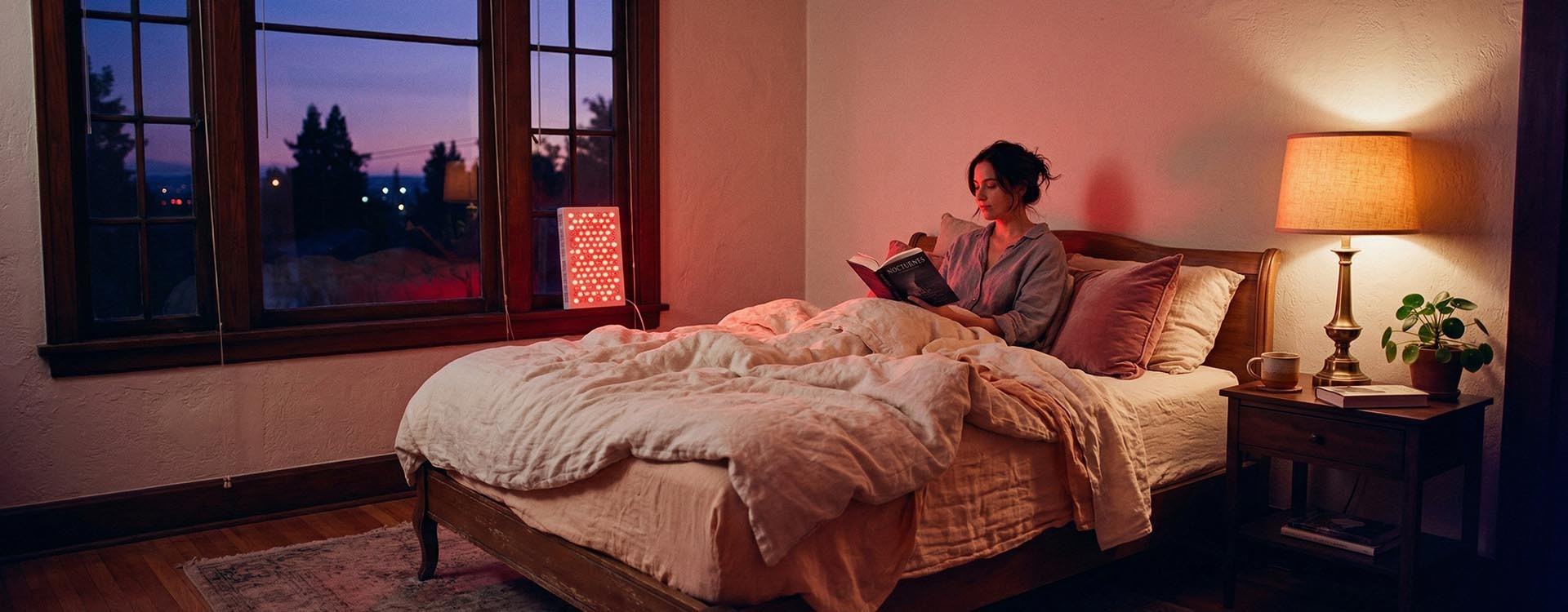
Implementing red light therapy for sleep is refreshingly practical. The simplest approach is to replace standard overhead evening lighting with red or amber-spectrum alternatives, and to incorporate a red light panel session of ten to twenty minutes in the hour or two before bed. Position the panel at a comfortable distance, relax — reading, meditating, or simply winding down — and allow the light to work its biological magic on your nervous system and melatonin pathways.
Choosing a device with low EMF emissions and flicker-free LEDs is particularly important for evening use, as both electromagnetic field exposure and light flicker have been associated with neurological stimulation that may counteract the relaxation benefits. The bedroom environment, overall, should prioritise warmth, dimness, and circadian compatibility — and red light therapy, used intelligently, is one of the most effective tools for achieving exactly that kind of biologically attuned sleep sanctuary.