









Shopping Cart
There are no more items in your cart





A Drug-Free Approach to Pain That Actually Works
Chronic pain is one of the most debilitating and widespread health challenges of the modern world. Whether it manifests as persistent back pain, aching joints, nerve discomfort, or the inflammation associated with conditions like arthritis, pain has a way of colonising every aspect of life — affecting sleep, mood, productivity, and independence. Conventional medicine offers a limited toolkit: anti-inflammatory medications carry long-term gastrointestinal and cardiovascular risks, while stronger analgesics come with dependence concerns. Many people are actively seeking safer, more sustainable alternatives.
Red light therapy has emerged as a genuinely compelling option. Backed by a substantial body of clinical research, photobiomodulation has demonstrated measurable pain-relieving effects across a wide range of conditions — not by masking pain signals, but by addressing the underlying biological mechanisms that generate them.
How Red Light Therapy Reduces Inflammation and Pain
Pain and inflammation are deeply intertwined. Most chronic pain conditions — arthritis, tendinitis, fibromyalgia, nerve pain — involve persistent inflammatory processes that sensitise pain receptors and sustain the cycle of discomfort. Red and near-infrared light therapy intervenes at multiple points in this cycle.
At the cellular level, photobiomodulation reduces the production of pro-inflammatory cytokines — the signalling molecules that drive and sustain inflammatory responses. It simultaneously boosts ATP production in damaged and stressed cells, accelerating their repair and reducing the oxidative stress that perpetuates inflammation. Near-infrared light (particularly at 850nm) also stimulates the release of nitric oxide, a vasodilatory molecule that improves local blood flow, delivering oxygen and nutrients to inflamed tissues while carrying away metabolic waste products. The combined effect is a genuine, measurable reduction in inflammation — and with it, a meaningful reduction in pain.
Targeted Applications: Back, Neck, Joints, and Nerves
One of the great practical advantages of red light therapy for pain is its versatility. The same fundamental mechanism works across different pain types, with treatment simply adjusted by device placement and session duration. Back pain — one of the most common reasons people seek both medical care and alternative therapies — responds particularly well to near-infrared treatment, as the 850nm wavelength penetrates deeply enough to reach paraspinal muscles, spinal ligaments, and intervertebral structures.
Joint pain and arthritis are perhaps the most extensively studied applications of therapeutic light. Research published in journals including Photomedicine and Laser Surgery has demonstrated that regular red light therapy sessions reduce joint inflammation, improve mobility, and decrease pain scores in patients with both osteoarthritis and rheumatoid arthritis. Neck pain, often driven by muscle tension and postural strain, responds rapidly to targeted near-infrared treatment, with many users reporting significant relief within just a few sessions. Neuropathic pain — notoriously difficult to treat with conventional medications — is also an active area of research, with promising results from studies examining the use of NIR light for peripheral neuropathy.
Red Light Therapy vs. Heat Therapy: Understanding the Difference
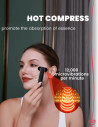
A common point of confusion is the relationship between red light therapy and heat therapy. Both can feel warm and soothing, and both have legitimate pain-relieving applications — but they work through entirely different mechanisms. Heat therapy increases blood flow through thermal vasodilation and relaxes muscles, providing temporary symptomatic relief. Red light therapy, by contrast, triggers photochemical reactions inside cells that produce lasting biological changes. It does not work through heat; the therapeutic benefit comes from the specific wavelengths of light being absorbed by cellular chromophores.
This distinction matters practically: red light therapy can be applied to inflamed tissues where heat application would be contraindicated, such as acute injuries or active arthritic flares. It also means the benefits of red light therapy accumulate over time, whereas heat therapy's effects are largely temporary. For chronic pain management, this cumulative, mechanism-based approach is far more valuable than any amount of heat application.
Building a Long-Term Pain Management Protocol
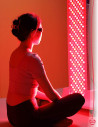
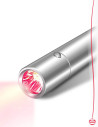
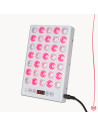
Managing chronic pain with red light therapy requires a consistent, structured approach. Most clinical protocols for pain conditions recommend sessions of fifteen to twenty minutes, applied directly to the affected area at a distance of five to fifteen centimetres (for targeted wand or belt devices) or at standard panel distance. Frequency matters: three to five sessions per week is a commonly recommended starting point, with daily sessions appropriate for acute flares or post-surgical recovery.
Results typically begin to emerge within two to four weeks for most pain conditions, with continued improvement over subsequent months of consistent use. Many users find that once their pain is under control, they can maintain their results with a reduced maintenance schedule of two to three sessions per week. Combining red light therapy with appropriate movement, physiotherapy, and anti-inflammatory nutrition strategies creates a genuinely powerful, drug-free pain management ecosystem — one that addresses both symptoms and the biological causes that sustain them.