







Shopping Cart
There are no more items in your cart





Why Protocol Matters as Much as the Device
You can own the most powerful red light therapy panel on the market and still fail to get meaningful results — not because the technology doesn't work, but because you're using it incorrectly. Protocol is the bridge between having a device and achieving your health goals. The right protocol means the right wavelengths for your specific objective, the right irradiance at the right distance, the right session duration, the right frequency, and the right timing relative to other activities like exercise, sleep, and skincare. Get the protocol right, and even a moderately powered device will deliver impressive results. Get it wrong, and even premium equipment will underperform.
The good news is that photobiomodulation protocols are well-studied and relatively straightforward to apply. The extensive clinical research literature gives us clear guidance on effective dosage parameters for most common applications, and the principles generalise well from clinical to home-use contexts. This section of the RedLightLux knowledge base synthesises that research into actionable, practical routines for the most important health goals — giving you the scientific framework and the day-to-day structure to use your device with maximum effectiveness.
The Core Parameters: Distance, Duration, and Frequency
Every effective red light therapy protocol is built around three foundational parameters: treatment distance, session duration, and treatment frequency. Treatment distance determines the irradiance your skin actually receives. Most consumer panels deliver optimal therapeutic irradiance (typically 50–150 mW/cm²) at a distance of 15–30cm. Closer distances increase irradiance but reduce coverage area and may exceed optimal dosage for sensitive skin; greater distances reduce irradiance and may fall below the therapeutic threshold. Always follow the manufacturer's irradiance data and recommendations for your specific device.
Session duration should be calibrated to deliver the therapeutic dose (measured in Joules per cm²) appropriate for your target tissue and condition. For most skin-level applications (660nm), five to fifteen minutes at the appropriate distance delivers the optimal dose range. For deeper tissue targets requiring NIR penetration (850nm), slightly longer sessions of ten to twenty minutes are typically indicated. Frequency recommendations vary by condition: for skin rejuvenation and maintenance, three to five sessions per week is well-supported. For acute pain management or recovery during heavy training periods, daily sessions are appropriate. For chronic condition management, the research generally supports five sessions per week initially, scaling to three per week as a maintenance protocol once therapeutic goals are achieved.
Protocols by Health Goal: Skin, Pain, Recovery, and Sleep
Optimising your protocol for a specific health goal requires understanding which wavelength, which irradiance range, and which timing considerations are most relevant to that goal. For skin rejuvenation and anti-aging, the primary wavelength is 660nm (with 850nm for deeper dermal effects), sessions of eight to fifteen minutes at fifteen to twenty-five centimetres, five days per week, with consistent long-term commitment of at least twelve weeks before assessing results. Perform sessions on cleansed skin before applying other skincare products to maximise light penetration.
For pain management — whether acute or chronic — near-infrared at 850nm is the primary wavelength, with the panel or targeted device positioned as close to the affected tissue as safely possible for maximum depth penetration. Sessions of fifteen to twenty minutes, once or twice daily for acute pain, tapering to once daily or five times weekly for chronic conditions, represent a well-supported starting protocol. For athletic recovery, applying NIR light to the treated muscle groups within thirty minutes of exercise — front and back surface coverage for large muscle groups — in sessions of ten to fifteen minutes per surface, with daily application during heavy training phases, has the strongest research support. For sleep optimisation, red light (660nm) exposure in the evening for ten to twenty minutes, two to three hours before bed, combined with avoidance of blue light sources in the same window, creates the most effective circadian signalling environment.
Daily and Weekly Routine Structures That Actually Work
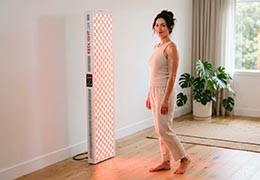
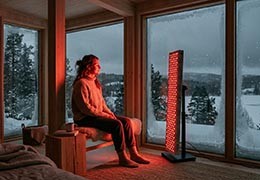
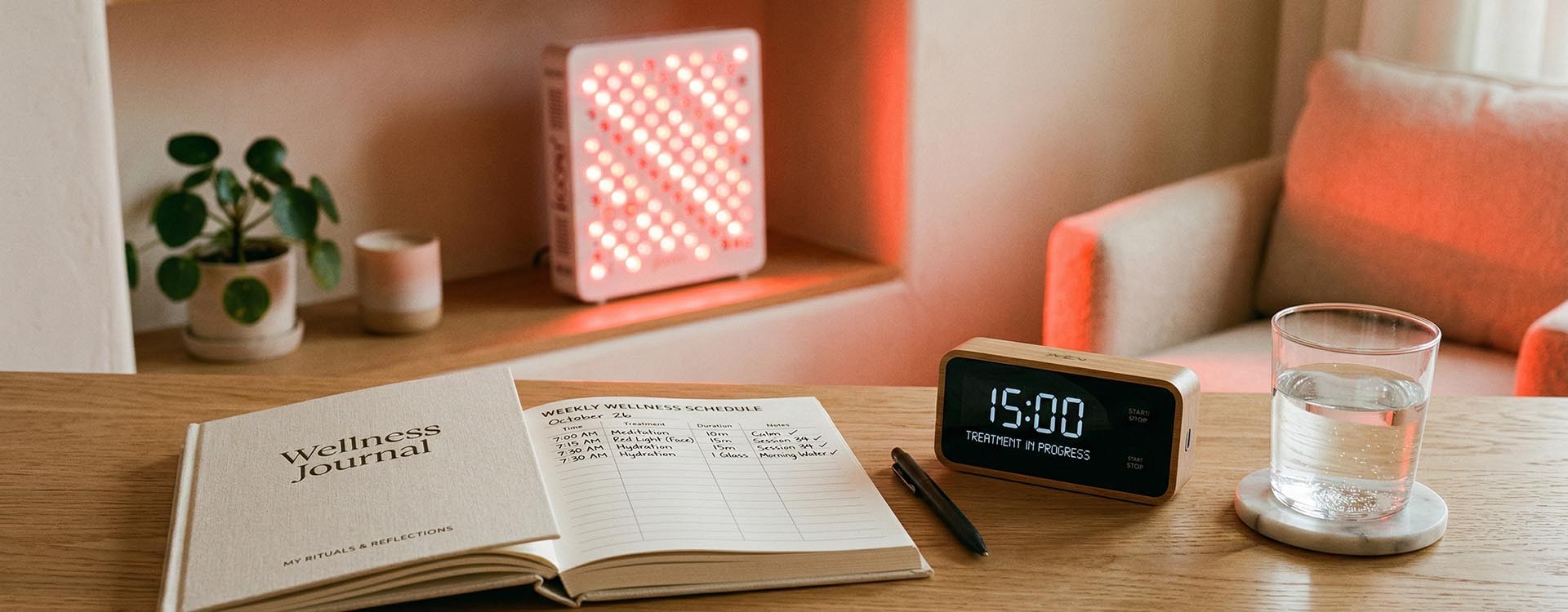
The most effective light therapy routines are those that attach to existing daily habits rather than requiring entirely new behavioural slots. Morning red light therapy — five to ten minutes of 660nm + 850nm panel exposure during a morning journaling, meditation, or reading session — provides an excellent circadian anchor: bright light exposure early in the day reinforces the wake phase of the circadian cycle, improves morning alertness, and sets up better sleep-onset timing in the evening. Post-workout NIR treatment attaches naturally to an existing training routine, with no additional time cost when performed during post-exercise stretching or cooling down. Evening red light exposure before bed replaces overhead lighting during the wind-down period, simultaneously providing therapeutic benefit and circadian support.
A comprehensive weekly structure for a general wellness user might look like: daily morning sessions of ten to fifteen minutes (660nm + 850nm full body or face/torso), post-workout NIR treatment on training days (ten to fifteen minutes per surface), and evening wind-down red light sessions three to four evenings per week. This structure totals forty-five to ninety minutes of weekly treatment time — comparable to a yoga class — with benefits that compound across every biological system the body operates. It is not an onerous programme; it is an investment in the quality of every day that follows.
Tracking Progress and Adjusting Your Protocol Over Time
One of the most empowering practices in red light therapy is systematic progress tracking. Because photobiomodulation effects are cumulative and gradual, week-to-week changes can feel invisible without a structured baseline. Before beginning your protocol, document your starting point with photographs (for skin-related goals), pain scores (for pain management), sleep quality metrics from a wearable tracker, or performance markers from athletic training logs. Reassess at four weeks, eight weeks, and twelve weeks to identify trends and adjust your protocol accordingly.
If results are slower than expected after eight weeks of consistent treatment, consider whether your device's irradiance is sufficient, whether your treatment distance is correctly calibrated, and whether session duration and frequency are aligned with the research-based recommendations for your specific goal. Many users find that modest protocol adjustments — increasing frequency from three to five sessions per week, or moving the device slightly closer to improve irradiance — produce a significant acceleration in results. Protocol refinement is an ongoing process of biological self-knowledge: learning how your specific body responds to photobiomodulation is the final, most personalised step in building a red light therapy practice that genuinely transforms your health over the long term.