







Shopping Cart
There are no more items in your cart






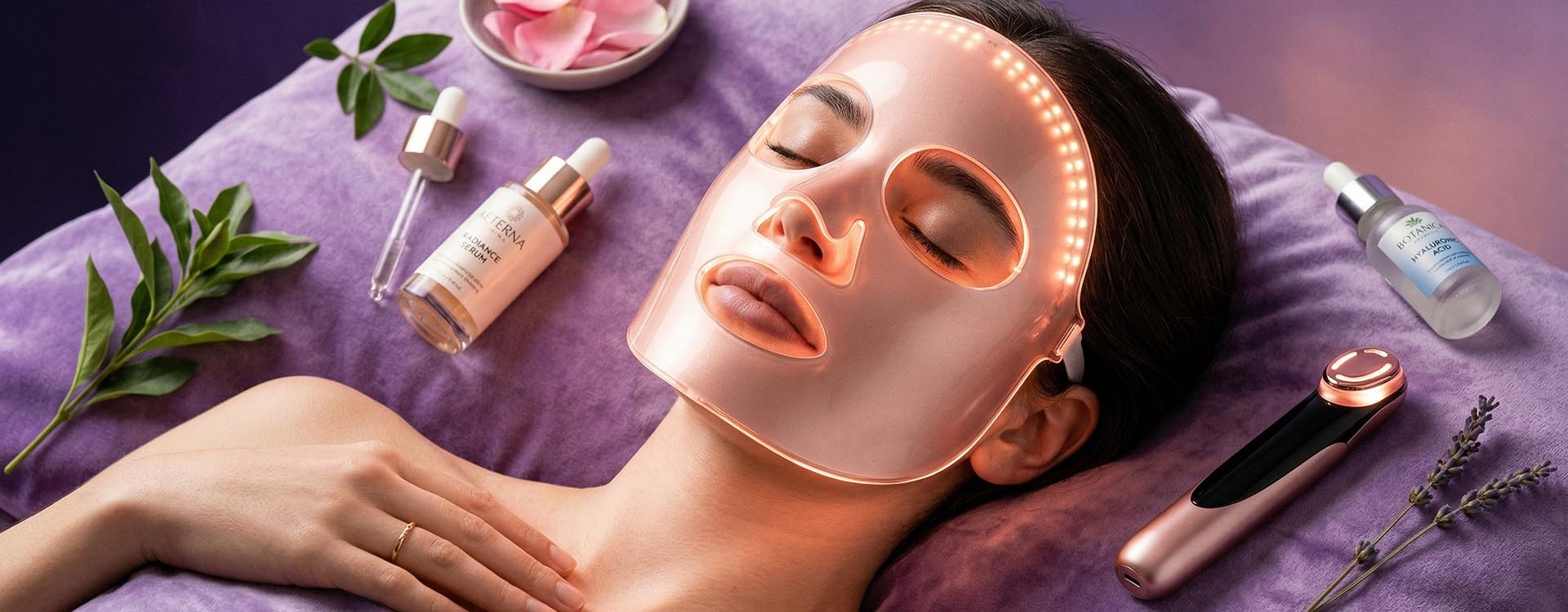
The New Frontier of At-Home Facial Technology
The skincare industry has undergone a quiet revolution. For decades, the most effective facial treatments — laser resurfacing, intense pulsed light, professional-grade LED phototherapy — were available only in clinical settings, requiring appointments, significant expense, and recovery time. The consumer device market has changed this equation dramatically: today, genuinely effective light-based skincare technology is available for home use, and for many skincare goals, consistent daily home treatment with a quality device outperforms occasional clinical visits.
Red light therapy facial devices represent one of the most scientifically credible categories in this market. Unlike many skincare gadgets that offer impressive-sounding technology with minimal evidence, photobiomodulation at 630–660nm for facial skin rejuvenation is backed by a substantial body of peer-reviewed clinical research — and the FDA has cleared multiple LED and laser facial devices for the treatment of fine lines, wrinkles, and acne based on this evidence. Understanding the different device formats, their respective strengths, and how to integrate them effectively into a skincare routine is the key to translating the science into visible results.
LED Masks: Hands-Free Facial Photobiomodulation
LED facial masks have become the most recognisable category of red light therapy skincare devices — and for good reason. By delivering therapeutic wavelengths across the full surface of the face simultaneously, hands-free and in a format that fits naturally into a skincare routine, they make consistent treatment effortless. Quality LED masks emit calibrated wavelengths of red (typically 630nm or 660nm) and often near-infrared (850nm) light through an array of LEDs positioned to cover forehead, cheeks, nose, mouth area, and chin in a single treatment.
The key quality differentiators in LED masks are LED quality and density, verified wavelength accuracy, irradiance at the skin surface (which varies significantly between budget and quality devices), and comfort of fit. Masks that fit the contours of the face closely will deliver more consistent irradiance across all treated areas than those that sit loosely — a design consideration that is often overlooked in budget products. For daily skincare-focused users who prioritise convenience and are targeting conditions like fine lines, skin texture, acne, and overall radiance, a quality LED mask represents an excellent investment that will deliver cumulative improvements over a consistent twelve-to-twenty-four week commitment.
Face Wands: Precision, Portability, and Targeted Treatment
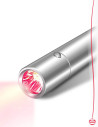
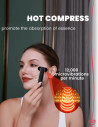
For users who want targeted, flexible treatment rather than full-face coverage, the red light face wand offers a compelling alternative. These handheld devices allow precise placement over specific areas of concern — the crow's feet at the outer corners of the eyes, the nasolabial folds, a patch of hyperpigmentation, an active blemish, or the jawline and neck where skin laxity often develops. The ability to spend additional time on specific problem areas, rather than treating the whole face uniformly, makes wands an attractive complement to broader panel or mask treatment.
The portability of wand-format devices is another significant advantage: they pack easily for travel, require minimal storage space, and can be used during otherwise idle moments — sitting on the sofa in the evening, or applying treatment to the neck while watching TV. The limitation of wands is coverage area and the effort required to maintain consistent positioning during treatment — for full-face anti-aging protocols, the mask or panel format will always be more time-efficient. Many skincare-focused users find that combining a full-face LED mask session with targeted wand treatment of specific problem areas gives them the best of both worlds.
Building a Results-Driven Red Light Skincare Routine
Consistency, sequencing, and synergy are the three pillars of an effective red light skincare routine. Consistency means committing to regular treatment — ideally daily or near-daily — for a minimum of eight to twelve weeks before assessing results. The cumulative nature of collagen remodelling and cellular rejuvenation means that sporadic treatment produces minimal visible change, while consistent treatment produces progressively improving results over months and years.
Sequencing matters because cleansed skin with no barrier-forming products applied allows maximum light penetration to the target cells. Perform your light therapy session on freshly cleansed skin, before applying serums, moisturisers, or sunscreen. The increased cellular activity following a photobiomodulation session also creates an ideal window for active ingredient absorption — applying targeted serums (vitamin C, retinol, hyaluronic acid, or peptides) immediately after a light session may enhance their uptake and efficacy. Synergy means thinking about your red light therapy as one component of a comprehensive skincare strategy — not a standalone intervention, but a powerful amplifier of everything else you're doing for your skin.
Sensitive Skin, Specific Conditions, and When to Exercise Caution
Red light therapy is one of the most skin-compatible treatments available — but certain conditions and circumstances warrant thoughtful approach. Skin that has recently been treated with chemical peels, laser procedures, microneedling, or injectables like botox or fillers may be more sensitive to light exposure in the days immediately following treatment. As a general principle, wait at least twenty-four to forty-eight hours after any invasive or semi-invasive facial procedure before resuming red light therapy, and start with shorter, lower-intensity sessions when returning to treatment after any skin barrier disruption.
People with active photosensitive skin conditions, those taking photosensitising medications, or those with a history of melanoma or other skin cancers should consult a dermatologist before beginning a facial light therapy routine. For the vast majority of skin types — including sensitive skin, which often responds particularly well to red light's anti-inflammatory and barrier-supporting effects — red light therapy is a gentle, nourishing, and cumulative investment in the health and vitality of the skin that covers your most visible and expressive surface. Used correctly, it is genuinely one of the most fabulous tools in the modern skincare arsenal.