









Shopping Cart
There are no more items in your cart








Inflammation: The Hidden Driver Behind Modern Disease
If you want to understand why so many people in the developed world are chronically unwell despite access to unprecedented medical care and nutritional knowledge, start with inflammation. Acute inflammation is one of the body's most powerful and necessary healing mechanisms — the rapid, targeted response that fights infection, heals wounds, and repairs damaged tissue. Chronic inflammation, however, is something entirely different: a low-grade, persistent, systemic state of immune activation that underlies the pathology of cardiovascular disease, type 2 diabetes, Alzheimer's disease, cancer, autoimmune conditions, and virtually every major chronic illness of the modern era.
The causes of chronic inflammation are deeply embedded in modern life: processed food, sedentary behaviour, chronic sleep deprivation, chronic psychological stress, environmental toxin exposure, and — significantly — light deficiency. The human body evolved in a full-spectrum light environment that actively modulated inflammatory responses through photobiological mechanisms we are only now beginning to fully understand. Red light therapy is, in a very real sense, a targeted intervention against chronic inflammation at the cellular level — and the evidence supporting this application is among the most robust in the entire photobiomodulation field.
How Red Light Therapy Reduces Inflammation at the Cellular Level
The anti-inflammatory mechanism of red and near-infrared light therapy operates through multiple simultaneous pathways, which is part of why its effects are so broad and its applications so diverse. At the mitochondrial level, photobiomodulation reduces the production of reactive oxygen species (ROS) — the unstable molecular species that drive oxidative stress and amplify inflammatory signalling cascades. By boosting cytochrome c oxidase activity and improving the efficiency of the electron transport chain, red light therapy essentially cleans up the metabolic process that, when dysregulated, produces the excess ROS that sustains chronic inflammation.
Simultaneously, photobiomodulation reduces the production and activity of pro-inflammatory cytokines — including TNF-alpha, IL-1beta, and IL-6 — the molecular messengers that propagate and sustain inflammatory states throughout the body. Research has also demonstrated that red light therapy activates anti-inflammatory gene expression pathways, essentially shifting the cellular epigenetic environment toward a more regenerative and less inflammatory phenotype. The release of nitric oxide — which has both vasodilatory and immunomodulatory properties — adds a further anti-inflammatory dimension by improving tissue oxygenation and modulating immune cell activity in treated areas.
Mitochondria, ATP, and the Energy Foundation of Health
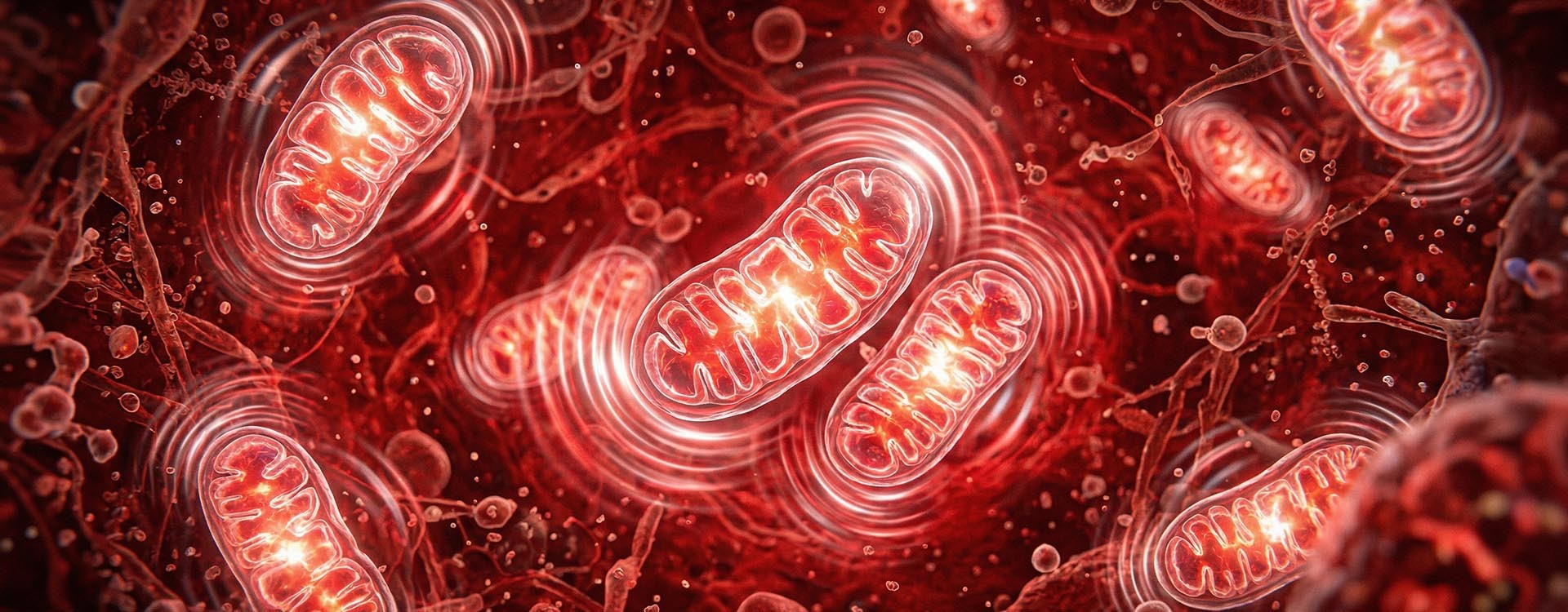
Every biological process in the body — from immune function to tissue repair to cognitive performance — is fuelled by ATP, the primary energy currency of cells. Mitochondria are the ATP-producing organelles at the centre of this system, and their health and efficiency are foundational to every aspect of biological function. When mitochondria are functioning optimally — producing abundant ATP with minimal oxidative waste — cells are able to perform their specialised functions effectively, repair damage promptly, and maintain the structural integrity that underlies organ health and longevity.
When mitochondrial function is compromised — as it is by aging, chronic inflammation, oxidative stress, nutritional deficiency, and light deprivation — the consequences ripple outward into every biological system. Energy levels fall. Repair processes slow. Immune responses become dysregulated. The gradual accumulation of mitochondrial dysfunction is now recognised as a central mechanism of biological aging and the pathogenesis of major chronic diseases. Red light therapy's ability to directly stimulate mitochondrial function — via cytochrome c oxidase activation — is therefore not merely a cellular curiosity. It is a direct intervention at the very engine of biological vitality.
Cellular Repair, Regeneration, and the Science of Longevity
The connections between photobiomodulation and longevity are not speculative — they are mechanistically grounded in what we know about the biology of aging. Cellular senescence (the accumulation of dysfunctional "zombie cells" that no longer divide but continue to secrete inflammatory signals), mitochondrial decline, accumulating oxidative damage to DNA and proteins, and chronic systemic inflammation are the four horsemen of biological aging. Red light therapy addresses all four, to varying degrees.
By reducing oxidative stress, improving mitochondrial efficiency, stimulating cellular repair and autophagy processes, and suppressing the chronic inflammatory signalling that accelerates aging at the systemic level, regular photobiomodulation may represent one of the most physiologically coherent anti-aging interventions available. Research specifically examining the effects of photobiomodulation on biological aging markers — telomere length, inflammatory biomarkers, mitochondrial function — is ongoing and producing increasingly exciting results. The longevity biohacking community has taken notice: red light therapy is now a standard component of the anti-aging toolkit among those who are serious about extending both healthspan and lifespan.
Practical Cellular Optimisation: Biohacking with Light
The concept of "biohacking" — using evidence-based interventions to optimise biological function beyond conventional wellness standards — has brought a new level of systematic intentionality to how people approach health tools like red light therapy. Rather than treating photobiomodulation as a passive remedy for existing problems, the biohacking perspective positions it as a proactive optimisation tool: a way to maintain and enhance cellular function before dysfunction emerges, and to keep the biological systems underlying performance, cognition, and longevity operating at their peak.
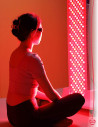
Full body red light therapy, applied consistently as part of a daily or near-daily practice, represents the most comprehensive approach to cellular optimisation through photobiomodulation. Targeting multiple body surfaces in each session ensures that the mitochondria, fibroblasts, immune cells, nerve fibres, and vascular endothelium across the entire body receive regular therapeutic light stimulation. Combined with supporting practices — quality sleep, anti-inflammatory nutrition, regular exercise, and stress management — this kind of systematic light-based cellular optimisation is one of the most powerful and accessible tools available to anyone serious about the quality and duration of their biological life.