





Shopping Cart
There are no more items in your cart








Is Red Light Therapy Actually Safe? The Honest Answer
Red light therapy has one of the most favourable safety profiles of any active wellness technology on the market — but "generally safe" is not the same as "safe in all circumstances for all people." Making intelligent decisions about any health technology requires understanding both what the evidence says about its risks and what specific circumstances require extra caution. Red light therapy at therapeutic wavelengths (630–850nm) and therapeutic intensities is non-ionising, meaning it does not carry the DNA-damaging potential of UV or X-ray radiation. It does not cause burns at standard therapeutic intensities. It has been used in clinical research on tens of thousands of subjects without serious adverse events in the peer-reviewed literature.
That said, as with any effective biological intervention, there are edge cases, contraindications, and usage errors that can produce suboptimal or adverse outcomes. Understanding these is not a reason for fear — it is the foundation of safe, effective use. This section addresses the safety landscape of red light therapy with the same rigorous honesty we bring to all our content: not to alarm, but to inform.
Eye Safety: The Most Important Precaution
If there is one safety consideration in red light therapy that deserves absolute emphasis, it is eye protection. The eyes are the most light-sensitive organs in the body, and sustained exposure to high-irradiance red or near-infrared light — even without thermal sensation — can cause retinal damage over time. This risk is particularly significant with near-infrared wavelengths, which are invisible to the naked eye: because you cannot see NIR light directly, your natural aversion reflex won't protect you from overexposure the way it would with visible glare.
The solution is simple: always wear appropriate protective goggles during red light therapy sessions. Standard sunglasses are insufficient — you need goggles specifically rated to block both the red and near-infrared wavelengths used in your device. Quality devices will always be supplied with or explicitly recommend appropriate eye protection. If a device does not address this consideration in its documentation, treat that as a quality and safety red flag.
EMF Emissions: Understanding the Real Risk
Electromagnetic field (EMF) emissions from red light therapy devices are a legitimate concern for users who are EMF-sensitive or simply wish to minimise unnecessary electromagnetic exposure in their wellness practices. All electrical devices produce EMF, and red light therapy panels — which use arrays of high-power LEDs driven by switching power supplies — are no exception. The relevant question is not whether a device produces EMF, but whether the EMF levels at typical treatment distances are within ranges considered safe by regulatory standards.
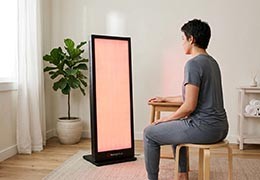
Quality manufacturers test their devices for EMF emissions and publish the results, typically showing that emissions at the standard treatment distance of 15–30cm fall well within internationally accepted safety thresholds. Budget devices frequently omit this testing and documentation entirely. For users who wish to minimise EMF exposure, maintaining the full recommended treatment distance (rather than placing the device in direct contact with the skin) is the most practical and effective strategy. Direct skin contact with any LED panel increases EMF exposure unnecessarily and offers no therapeutic benefit — the optimal treatment distance for most devices is already calibrated for both safety and effectiveness.
Who Should Exercise Caution or Avoid Red Light Therapy?
While red light therapy is appropriate for the vast majority of healthy adults, several populations require additional caution or medical consultation before beginning treatment. Pregnant women should avoid direct treatment over the abdomen and seek guidance from their healthcare provider before using full-body systems, as the effects of photobiomodulation on fetal development have not been adequately studied. People with active cancers or a history of cancer should consult their oncologist: while there is no established evidence that red light therapy promotes cancer progression, and some research suggests potential therapeutic roles in cancer care, this is an area where individual medical guidance is essential.
Individuals taking photosensitising medications — including certain antibiotics, antidepressants, and anti-inflammatory drugs — may experience increased skin sensitivity to light and should consult their prescribing physician. People with active lupus or other photosensitive autoimmune conditions require careful medical oversight before beginning any light therapy. Individuals with implanted electronic devices (pacemakers, drug pumps) should avoid direct panel placement over the implant site. Children can generally use red light therapy safely with adult supervision at appropriate distances, but specific paediatric protocols should be established in consultation with a healthcare professional.
Dosage, Distance, and the Risk of Overuse
Red light therapy follows the principle of hormesis — the concept that biological systems respond optimally to stimuli within a specific dose range, with both insufficient and excessive doses producing suboptimal results. In photobiomodulation, this is described as the biphasic dose response: too little light produces minimal therapeutic effect, while too much can actually inhibit the cellular responses you're seeking to stimulate. This means that more exposure is not always better, and that respecting dosage guidelines is genuinely important for maximising results.
The practical implications are straightforward. Maintain the manufacturer-recommended treatment distance — typically 15–30cm for most consumer panels — which is calibrated to deliver the optimal irradiance range at the skin surface. Keep sessions within the recommended duration of ten to twenty minutes per treatment area. Allow the body adequate recovery time between sessions: three to five times per week is optimal for most applications, with daily use generally safe for most healthy adults when sessions are kept within recommended durations. If you experience unexpected skin sensitivity, unusual fatigue, or other adverse reactions, reduce session frequency and duration and consult a healthcare professional if symptoms persist.