







Shopping Cart
There are no more items in your cart

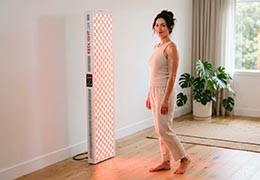




The Sauna Experience, Reimagined for Home Use
Traditional saunas have been used for thousands of years across cultures from Finland to Japan, and the health benefits of regular sauna use are among the most extensively documented in wellness research. A landmark cohort study from the University of Eastern Finland followed over two thousand men for twenty years and found that regular sauna use was associated with dramatically reduced risk of cardiovascular disease, sudden cardiac death, and all-cause mortality. The problem, for most people, is access: traditional saunas are expensive to install, require significant space, and take time to heat up and cool down.
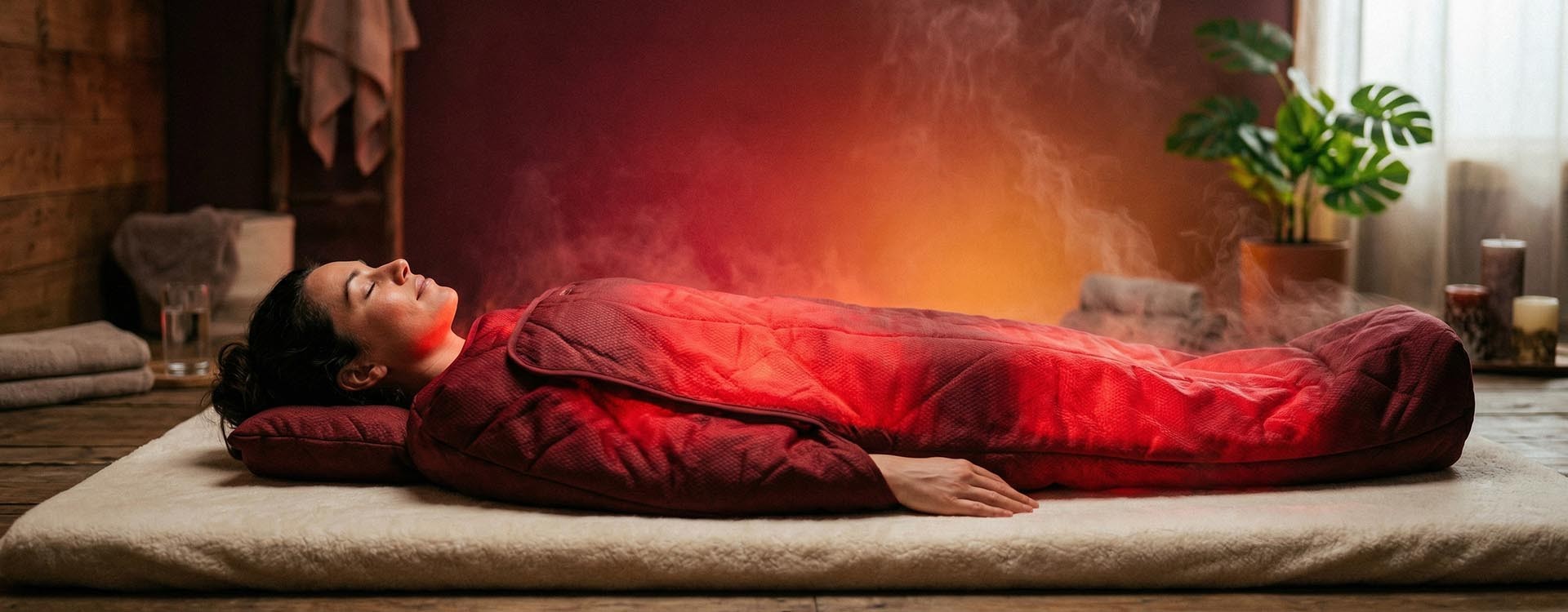
Infrared sauna blankets solve this access problem elegantly. By wrapping the body in flexible panels that emit near-infrared wavelengths directly into the skin, sauna blankets deliver the core biological benefits of infrared heat therapy — improved circulation, muscle relaxation, accelerated recovery, skin benefits, and cardiovascular conditioning — in a format that can be used in your bedroom, requires no installation, and is ready to use in minutes. They are, for a growing number of people, the most practical and affordable path to the transformative effects of regular infrared sauna use.
How Infrared Sauna Blankets Work: Heat Plus Light
It's important to understand that infrared sauna blankets work through two distinct but synergistic mechanisms. The thermal component — the heat generated as near-infrared radiation is absorbed by the body — produces the vasodilation, sweating, and cardiovascular conditioning associated with traditional sauna use. Core body temperature rises modestly (by approximately one to two degrees Celsius during a typical session), triggering a cascade of heat-adaptation responses: increased heart rate, improved peripheral circulation, heat shock protein activation, and the metabolic benefits that accompany mild thermal stress.
The photobiomodulation component — the direct cellular effects of near-infrared wavelengths on mitochondrial function — adds a layer of biological benefit that traditional saunas, which rely on convective and conductive heat rather than infrared radiation, cannot match. ATP production is stimulated in tissues throughout the body, inflammation is reduced, and the same nitric oxide-driven circulatory improvements associated with NIR light therapy panels occur across a much larger surface area simultaneously. This dual-mechanism profile is what distinguishes quality infrared sauna blankets from simple electric blankets or conventional heating pads.
The Real Science of Detoxification Through Sweating
The word "detox" is heavily misused in wellness marketing — and it's worth being honest about what infrared sauna blankets can and cannot do in this regard. The human body has a sophisticated, highly effective detoxification system centred primarily on the liver, kidneys, and lymphatic system. Sweating — whether induced by exercise, heat, or infrared exposure — does contribute to the elimination of certain compounds through the skin, including some heavy metals (lead, cadmium, arsenic, mercury) and BPA, a common environmental pollutant. Multiple peer-reviewed studies have confirmed that sweat contains measurable concentrations of these compounds at biologically relevant levels.
What sweating cannot do is "detox" the body of the full spectrum of metabolic waste products or substitute for liver and kidney function. Claims that infrared saunas deliver dramatic detoxification of a comprehensively "toxic" body should be treated with critical scepticism. What the evidence does support is a more modest but genuine proposition: regular infrared-induced sweating is a meaningful complementary pathway for eliminating specific fat-soluble toxins and heavy metals, contributing to an overall reduction in toxic body burden over time when combined with a liver-supportive diet and lifestyle.
Recovery, Relaxation, and Cardiovascular Conditioning
Beyond detoxification, infrared sauna blankets offer well-evidenced benefits across several health domains. Muscle recovery is one of the most immediate and practically relevant applications: the combination of deep-penetrating NIR photobiomodulation and thermal vasodilation creates an exceptionally effective environment for clearing exercise metabolites, reducing inflammation, and promoting tissue repair. Many athletes use an infrared blanket session in the evening after heavy training days as a capstone recovery intervention, combining the benefits of passive heat exposure with active photobiomodulation in a single convenient session.
Cardiovascular conditioning is another significant benefit. Regular passive heat exposure from infrared blankets creates a mild but genuine cardiovascular training stimulus — heart rate increases, stroke volume rises, and arterial compliance improves in ways that partially mimic the effects of moderate aerobic exercise. For people with limited mobility or recovering from injury who cannot exercise adequately, this cardiovascular maintenance function represents a genuinely valuable therapeutic benefit. Stress reduction and sleep improvement are also commonly reported — the parasympathetic activation associated with the warm, enveloping environment of a sauna blanket session makes it a powerful tool for evening relaxation and circadian rhythm support.
Choosing and Using an Infrared Sauna Blanket Safely
Safety is the primary consideration when evaluating infrared sauna blankets. High-quality blankets are constructed from non-toxic, low-VOC materials, use properly shielded infrared heating elements to minimise EMF exposure, and include accurate temperature controls with automatic shut-off features. Avoid products that do not disclose their materials, cannot provide EMF test data, or lack established safety certifications.
For use, the standard protocol is to wear light, breathable clothing during sessions (cotton is preferable), hydrate well before, during, and after each session, and start conservatively at lower temperatures (typically 45–55°C) for shorter durations (twenty to thirty minutes) before gradually extending session time and temperature as your heat tolerance develops. Sessions two to four times per week are appropriate for most users seeking recovery and general wellness benefits. Contraindications include pregnancy, cardiovascular conditions requiring medical management, fever or acute illness, and certain skin conditions — always consult a healthcare professional if you have any underlying health concerns before beginning a regular infrared blanket routine.